

Changing Money in Batam: SGD to IDR, Fair Rates, Cards and QRIS
A practical checklist for comparing exchange rates, spotting licensed money changers, paying by card or QRIS, and avoiding hidden markups in Batam.
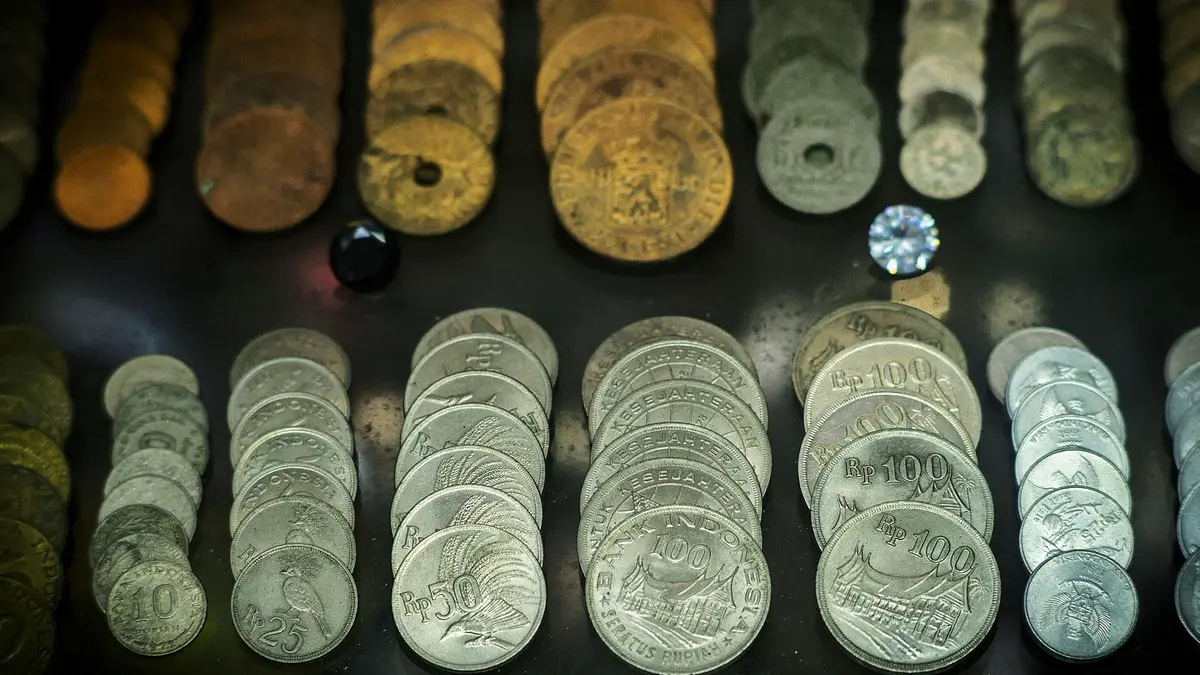
Check the daily benchmark before you exchange
Start with the benchmark rate for your trip. batam.co.id publishes the SGD and USD to Rupiah rate every day on its Kurs Hari Ini page, so check it before you leave and again on the day you exchange. (batam.co.id)
Other sites publish mid-market rates, but the rate shown by a converter is informational only and is not necessarily the rate you receive when you actually send or exchange money. Wise, for example, states that it uses the real mid-market rate with no markup, while currency rates differ between companies. (Xe)
To judge a fair rate, compare the offered rate with your benchmark and work out the spread. The spread is the difference between the benchmark and the offered rate, divided by the benchmark, expressed as a percentage. A smaller spread means less markup. Most money changers make their margin by marking up the exchange rate or by adding fees, so the figure that matters is the total amount of rupiah you receive after all costs. Rates and fees vary a lot between providers. (Airwallex)
Example only, using round numbers for arithmetic: if your benchmark is 14,000 IDR per SGD and a counter offers 13,600 IDR, the spread is (14,000 − 13,600) ÷ 14,000 = 2.9%. This is an illustration only. Verify the daily rate on Kurs Hari Ini before you exchange. (Western Union)
Where to exchange: malls, ferry terminals and hotels
Start with the places you already pass through: ferry terminals, shopping malls and hotel areas. A terminal counter is convenient when you land and need cash immediately; a mall counter makes it easier to compare more than one provider on foot; a hotel desk is the most convenient of all. Bureaus that rely on captive footfall, such as airport counters, often charge higher fees and offer less competitive rates. If you need cash on arrival, exchange a small amount there and do the rest in town. A travel source specifically warns against hotel exchange, so compare a hotel quote with other counters before accepting it. (Airwallex)
Before committing, look at the rate board, ask exactly how many rupiah you will receive for the Singapore dollars you hand over, and ask whether any fee is charged on top. Because rates and fees vary widely, the total you receive matters more than the headline rate. Online tools can help you compare money changers before you travel.
How to spot a Bank Indonesia-licensed money changer
Indonesia authorises non-bank money changers as KUPVA. Bank Indonesia requires a licensed operator to display, in an easily visible place on the premises, the licensed-KUPVA logo issued by Bank Indonesia and the words Penyelenggara Kegiatan Usaha Penukaran Valuta Asing Berizin (Authorized Money Changer), together with its Bank Indonesia business licence certificate. If any of these is missing, or the name on the certificate does not match the counter, treat the operator as unlicensed and walk away. Bank Indonesia publishes a PDF list of licensed operators and a separate list of operators whose licences were revoked; check the name before you hand over cash if you are unsure. (Bank Indonesia)
Cards and ATMs: avoid bad conversions
Using a card is simpler than carrying a large bundle of cash, but the total cost still depends on the provider. Compare the offered rate and any fee with the same benchmark you use for cash counters, because the total amount of rupiah you can spend is what matters. If an ATM, card terminal or payment page asks whether to charge you in Singapore dollars or Indonesian rupiah, choose rupiah. Letting the foreign terminal convert usually gives a worse rate than your own bank or card provider.
Estimates for conversions vary by payment method and payout method, and rates change daily, so read the fee schedule before you rely on a card abroad. Check your own card’s foreign-transaction terms and ATM withdrawal charges before departure, because bank-specific fees are not listed here.
Paying with QRIS from a Singapore bank app
For retail payments, the Indonesia-Singapore cross-border QR linkage allows customers of participating Singapore banks to use their existing mobile banking apps to scan QRIS codes at Indonesian merchants. Bank Indonesia and the Monetary Authority of Singapore launched this linkage on 17 November 2023. The participating Singapore institutions named are OCBC and UOB, with DBS joining at a later stage. If your bank is not on that list, payment through your bank app may not be available, so keep a card or cash as backup.
In practice: open your bank app, choose its QR payment option, scan the merchant’s QRIS code, check the rupiah amount before confirming, and keep the receipt or payment reference. The app performs the conversion, so check your bank’s rate and fees in the app or on its tariff page before the trip. Have a fallback if your phone has no data connection. (Monetary Authority of Singapore)
The Rupiah-only rule for payments
Indonesian Law 7/2011 on Currency, Article 21(1), requires Rupiah to be used in every transaction whose purpose is payment, in settling other obligations that must be met with money, and in other financial transactions within Indonesia. Article 21(2) lists exceptions, including certain state-budget transactions, foreign grants, international trade, foreign-currency bank deposits and international financing. For an ordinary visitor the practical point is simple: pay in rupiah, whether in cash, by card or through QRIS. If a normal retail invoice is written in foreign currency, ask for it to be issued in IDR and compare it against your benchmark before paying. (Wikisource, Indonesian Law 7/2011)
Common traps
- Airport counters often charge higher fees and offer less competitive rates; if you need cash on arrival, exchange a small amount there and do the rest in town.
- Hotel exchange and bank FX markups should be treated as convenience options and compared against other providers.
- A larger gap between the offered rate and the mid-market benchmark means a higher hidden markup.
- Dynamic currency conversion: if you are offered a charge in Singapore dollars, choose rupiah instead.
- Unlicensed operators: no Bank Indonesia logo, no required words, or no matching licence certificate means walk away.
- Stale rates: the daily rate moves, so recheck your benchmark on the day you exchange.
- QRIS is only available from the participating Singapore banks named above, so keep a card or cash fallback.
A simple pre-exchange checklist
- Check the daily SGD and USD to Rupiah rate on Kurs Hari Ini.
- Walk to a counter, note the offered rate and ask about any fee.
- Calculate the spread and compare it with another counter.
- Confirm the licensed-KUPVA logo, required words and licence certificate.
- Count your cash before leaving the counter and keep the receipt.
- For cards and QRIS, choose to be charged in rupiah and check fees in advance.
Singapore dollar to rupiah today
5 Oct – 13 Nov 2026: low Rp. 13,963, high Rp. 14,200. Bank Indonesia middle rate, updated 13 November 2026; money changers in Batam quote slightly less. Full rate tables.
FAQ
Where can I check the SGD to IDR rate for Batam?
batam.co.id publishes the SGD and USD to Rupiah rate every day on its Kurs Hari Ini page. Currency converter sites also publish mid-market rates, but those are not necessarily the rates you receive.
How do I tell if a money changer in Batam is licensed?
Bank Indonesia says a licensed non-bank money changer must display its licensed-KUPVA logo and the words Penyelenggara Kegiatan Usaha Penukaran Valuta Asing Berizin (Authorized Money Changer), plus its Bank Indonesia business licence certificate. Bank Indonesia also publishes lists of licensed and revoked operators.
Which Singapore banks can pay Indonesian merchants with QRIS?
Bank Indonesia and the Monetary Authority of Singapore launched the cross-border QR linkage on 17 November 2023. The participating Singapore institutions named are OCBC and UOB, with DBS joining at a later stage.
Must I pay in rupiah in Indonesia?
Indonesian Law 7/2011, Article 21(1), requires Rupiah to be used for payments and other financial transactions within Indonesia. Article 21(2) lists exceptions, including international trade and foreign-currency bank deposits.
Sources
- batam.co.id/kurs
- mas.gov.sg/news/media-releases/2023/launch-of-cross-border-qr-payments-linkage-between-indonesia-and-singapore
- bi.go.id/id/edukasi/Pages/Penjualan-Valuta-Asing.aspx
- id.wikisource.org/wiki/Halaman:UU_7_2011.djvu/11
- 1 SGD to IDR - Singapore Dollars to Indonesian Rupiahs Exchange Rate xe.com
- SGD to IDR Currency Converter | Western Union SG westernunion.com
- 8 Best Money Changers in Singapore (2026 Guide) airwallex.com
